 By Thezoqo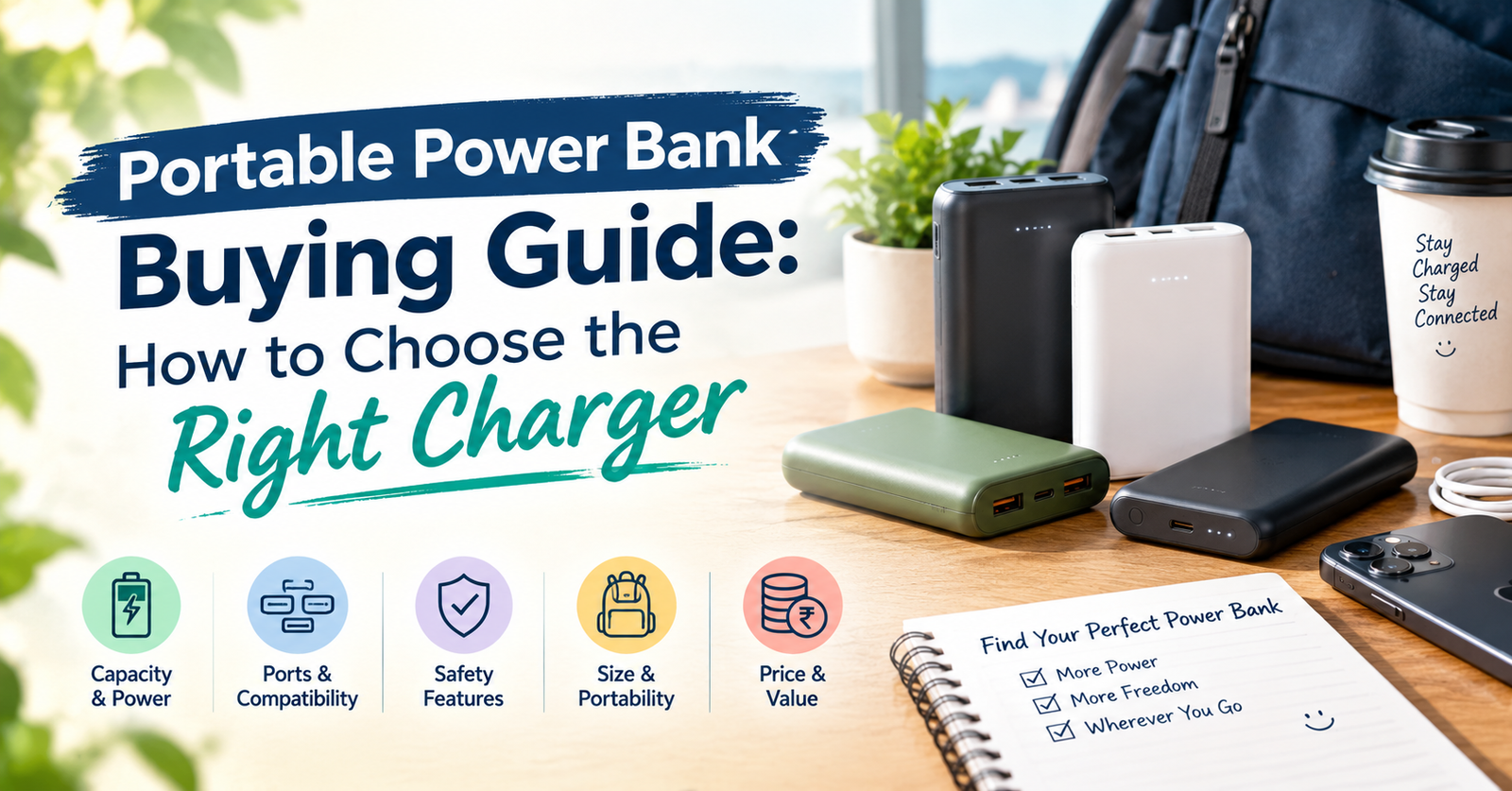
In our fast-paced, device-driven world, staying connected is no longer a luxury—it is an absolute necessity. Whether you are traveling across the country, commuting to work, hiking in the wilderness, or simply navigating a long day of back-to-back meetings, running out of battery on your smartphone, laptop, or tablet can disrupt your entire day. This is precisely why a high-quality external battery pack has become an essential everyday carry item.
However, walking into an electronics store or searching online can quickly become overwhelming. With thousands of options featuring different capacities, charging speeds, port types, and safety certifications, choosing the right device requires a clear understanding of your specific power needs.
This comprehensive portable power bank buying guide breaks down everything you need to know—from battery capacity metrics and fast-charging standards to port configurations, airline regulations, and safety features—helping you make a smart, informed purchasing decision.
What Is a Portable Power Bank and How Does It Work?
A portable power bank is essentially a high-density lithium-ion or lithium-polymer battery encased in a protective housing, controlled by a sophisticated circuit board. It acts as an energy reservoir, storing electrical energy when plugged into a wall outlet and releasing that energy to charge secondary devices via USB ports when you are on the go.
[ Wall Outlet ] ──► [ Power Bank Storage (Li-ion/Li-Po) ] ──► [ Output Circuitry ] ──► [ Smartphone / Laptop ]
The underlying technology relies on secondary battery cell chemistry, which allows for hundreds of charge and discharge cycles before capacity naturally degrades over time. According to detailed technical overviews on Wikipedia, early portable battery packs introduced in the early 2000s were bulky and inefficient, but advancements in lithium-polymer technology have allowed modern power banks to deliver massive energy density in sleek, pocket-sized form factors.
Understanding Capacity: How Much Power Do You Really Need?
The single most important specification listed on any charger is its capacity, measured in milliampere-hours (mAh) or watt-hours (Wh). This rating dictates how much total electrical charge the battery can store.
PORTABLE POWER BANK CAPACITY CATEGORIES
| 1. Pocket-Sized (3,000 mAh – 5,000 mAh): Emergency top-ups, lightweight |
| 2. Everyday Carry (10,000 mAh): 1.5 to 2 full phone charges, slim profile |
| 3. Travel / High-Capacity (20,000 mAh): 3 to 5 phone charges, charges tablets |
| 4. Heavy-Duty / Laptop Power Banks (25,000 mAh+): Charges laptops & multi-devices|
1. Pocket-Sized (3,000 mAh – 5,000 mAh)
- Best For: Ultra-light commuting, emergency top-ups, and minimalist travelers.
- Capabilities: Provides roughly 70% to 100% of a full charge for a standard smartphone.
- Pros: Extremely lightweight, fits easily into a front pocket or small clutch.
2. Everyday Carry (10,000 mAh)
- Best For: Daily use, weekend getaways, and general peace of mind.
- Capabilities: Charges a modern smartphone approximately 1.5 to 2.5 times on a single charge.
- Pros: Hits the sweet spot between portability, weight, and usable power.
3. Travel & Heavy-Duty (20,000 mAh – 26,800 mAh)
- Best For: Long travel days, camping trips, power outages, and charging multiple devices simultaneously.
- Capabilities: Charges smartphones 4 to 6 times, tablets 1.5 to 2 times, or supplies a partial charge to a USB-C laptop.
- Pros: Massive energy supply, multiple output ports, ideal for groups or families.
The Truth About Real vs. Advertised Capacity (Efficiency Ratings)
One common misconception buyers encounter is assuming a 10,000 mAh power bank will charge a 5,000 mAh phone battery exactly twice. In reality, energy transfer involves voltage conversions and heat loss.
Internally, portable power bank battery cells operate at an average nominal voltage of 3.7 Volts. However, standard USB charging operates at 5 Volts (or higher for fast charging). Converting the voltage from 3.7V up to 5V (and back down inside your phone) results in energy loss, alongside resistance heat loss through the charging cable.
As a rule of thumb, most modern chargers operate at an efficiency rate of 65% to 75%.
$$\text{Usable Capacity} = \text{Advertised Capacity} \times 0.70$$
Therefore, a 10,000 mAh power bank delivers roughly 7,000 mAh of actual usable energy to your devices. Keep this conversion loss in mind when selecting a capacity size!
Charging Speeds and Protocols Explained
Capacity determines how much power you have, but charging speed determines how fast your devices replenish their battery life. Understanding charging protocols is essential for selecting a charger that matches your device’s capabilities.
[ Power Delivery (USB-PD) ] ──► Fast Charging for iPhones, Pixels, & Laptops (18W to 100W+)
[ Quick Charge (QC 3.0/4.0) ] ──► Fast Charging for Android & Legacy Devices
[ Standard USB (5V/1A – 5V/2.4A) ] ──► Slow Charging for Earbuds & Smartwatches
1. Watts, Volts, and Amps
Power output is measured in Watts (W), which is calculated by multiplying Voltage (V) by Amperes (A):
$$\text{Power (Watts)} = \text{Voltage (Volts)} \times \text{Current (Amps)}$$
- Standard Charging (5W – 12W): Older 5V/1A or 5V/2.4A ports charge modern phones slowly, taking 2 to 3 hours for a full cycle.
- Fast Charging (18W – 30W): Replenishes modern smartphone batteries from 0% to 50% in approximately 30 minutes.
- Laptop Fast Charging (45W – 100W+): High-power delivery capable of powering power-hungry devices like MacBooks, Dell XPS, or PC handheld consoles.
2. USB Power Delivery (USB-PD)
USB Power Delivery is the universal fast-charging standard supported by Apple, Google, Samsung, and modern laptop manufacturers. A USB-PD power bank dynamically negotiates the exact voltage and current required by the connected device to deliver maximum safe power.
3. Quick Charge (QC) and Proprietary Standards
Developed by Qualcomm, Quick Charge is widely supported across Android smartphones. Additionally, brands like Samsung (Super Fast Charging) and OnePlus (VOOC/Dash) feature custom protocols. To achieve maximum speed, ensure your charger supports the specific protocol utilized by your phone manufacturer.
Port Selection and Cable Compatibility
When reviewing hardware specifications, pay close attention to the number and type of input and output ports available.
Input Ports (Recharging the Bank) ──► USB-C, Micro-USB, Lightning
Output Ports (Charging Devices) ──► USB-C (PD), USB-A (Standard), Wireless Qi/MagSafe
- USB-A Ports: The traditional rectangular USB port. Excellent for older devices, cable compatibility, and lower-power accessories.
- USB-C Ports: The modern universal standard. USB-C ports on premium chargers often function bidirectionally—serving as both the input port to recharge the bank and the output port to fast-charge external devices.
- Wireless & MagSafe Charging: Wireless power banks utilize Qi induction coils to charge phones cordlessly. Magnetic or MagSafe-compatible models snap directly onto the back of compatible iPhones and Android cases for seamless, cable-free convenience on the move.
For in-depth hardware reviews, smartphone accessory benchmarks, and lifestyle technology buying guides, explore The Zoqo for additional resources.
Important Features to Consider Before Buying
To ensure long-term satisfaction and safety, look for these essential advanced features when narrowing down your options:
[ Pass-Through Charging ] ──► Charge the power bank AND connected device simultaneously.
[ Trickle-Charge Mode ] ──► Safely charge low-draw items (wireless earbuds, fitness bands).
[ Digital LED Screen ] ──► Displays exact remaining battery percentage (e.g., “78%”).
[ Rugged Housing ] ──► Dustproof, shockproof, & water-resistant for outdoor use.
1. Pass-Through Charging
Pass-through capability allows the power bank to recharge itself from a wall outlet while simultaneously supplying power to connected external devices. This is particularly useful when traveling with limited available wall outlets in hotel rooms or airports.
2. Trickle-Charging / Low-Current Mode
High-capacity chargers often feature automatic shutoff sensors designed to power down when current draw drops below a certain threshold. Unfortunately, this can cause the power bank to stop charging low-draw accessories like Bluetooth earbuds, smartwatches, or fitness trackers. A dedicated low-current mode bypasses this shutoff, ensuring your small accessories charge safely and completely.
3. Digital Power Indicators
Basic power banks utilize 3 or 4 simple LED dots to indicate remaining power, which provides only a rough estimate. Premium models feature a digital LED display screen that shows the exact remaining battery percentage, input wattage, output wattage, and estimated time to full charge.
4. Build Quality and Form Factor
Consider how you plan to transport your charger:
- Plastic Enclosures: Lightweight, cost-effective, and available in various colors.
- Aluminum Alloys: Highly durable, sleek, and premium-feeling, though slightly heavier.
- Rugged / Outdoor Enclosures: Feature rubberized bumpers, sealed port covers, dustproofing, and IP67 water resistance for camping and extreme environments.
Airline Regulations and Travel Safety (TSA Rules)
If you plan to travel by air, understanding aviation battery regulations is critical to avoid having your gear confiscated at security checkpoints.
Because lithium batteries present a potential fire risk if damaged or short-circuited, international aviation authorities (such as the FAA and TSA) enforce strict rules regarding battery transportation:
- Carry-On Baggage Only: Power banks are strictly prohibited inside checked luggage. They MUST be kept inside your carry-on bags or personal items in the cabin, where crew members can respond immediately in the rare event of a thermal event.
- The 100 Watt-Hour Limit: You can bring power banks rated up to 100 Watt-hours (Wh) without prior airline approval. This translates to roughly 26,800 mAh at 3.7V.
- Special Approval (100Wh to 160Wh): Chargers between 100Wh and 160Wh require special permission from the airline prior to boarding, and items exceeding 160Wh are completely banned on passenger aircraft.
TSA AIRLINE BATTERY REGULATIONS
| • Allowed in Carry-On Luggage: YES
| • Allowed in Checked Baggage: NO (Strictly Banned)
| • Maximum Capacity Without Approval: 100 Wh (~26,800 mAh at 3.7V)
| • Approval Required: 100 Wh – 160 Wh (Max 2 units per passenger)
Safety Protections and Certifications
Never compromise on safety when purchasing lithium-based energy products. Cheap, uncertified power banks lack critical internal safeguards and can overheat, swell, melt, or cause electrical fires.
Always verify that your chosen model carries official safety certifications and includes a built-in Battery Management System (BMS) providing:
- Over-Current Protection: Prevents damaging sensitive device circuits by capping output current.
- Over-Voltage Protection: Shields connected devices from unsafe voltage spikes.
- Short-Circuit Protection: Automatically cuts off power if positive and negative terminals connect accidentally.
- Thermal Management: Temperature sensors shut down power transfer if internal heat exceeds safe operating limits.
- Certification Badges: Look for official testing marks such as UL Listed, CE, FCC, RoHS, and PSE.
Summary Checklist: Finding Your Perfect Match
To summarize this portable power bank buying guide, use this quick step-by-step checklist to select your ideal device:
- Determine your core use case: Are you looking for lightweight daily phone top-ups (5,000–10,000 mAh) or multi-day travel and laptop charging (20,000 mAh+)?
- Check your device fast-charging standards: Ensure the charger supports USB Power Delivery (USB-PD) or Quick Charge protocols matching your smartphone or laptop.
- Verify wattage outputs: Choose 20W+ for smartphones, 30W+ for tablets/iPads, and 65W–100W+ for USB-C laptops.
- Choose your port combination: Ensure you have enough USB-C and USB-A ports to charge all your daily gear simultaneously.
- Confirm airline compliance: Ensure the rating is under 100 Wh (26,800 mAh) if you plan to fly.
- Prioritize safety certifications: Stick to reputable brands featuring UL/CE marks and built-in thermal safeguards.
Frequently Asked Questions
Can a power bank ruin your phone’s battery?
No, provided you use a high-quality charger from a reputable manufacturer. Modern smartphones contain internal charge controllers that draw only the specific voltage and current required. However, using cheap, uncertified chargers with poor voltage regulation can generate excessive heat, which degrades battery health over time.
How long does a portable power bank last?
Most lithium-ion power banks maintain good performance for approximately 300 to 500 complete charge cycles. Depending on frequency of use, this translates to a lifespan of 2 to 4 years. Over time, battery capacity will naturally decline.
How should I store my external battery when not in use?
Store your power bank in a cool, dry place away from direct sunlight. For long-term storage, keep the battery charged to roughly 50% to 70% rather than 0% or 100%, as extreme states of charge accelerate chemical degradation over long periods.
Final Thoughts
A reliable external battery pack is one of the most practical investments you can make for your digital lifestyle. By matching the capacity, wattage output, and port selection to your specific devices, you can travel with complete confidence knowing you will never be caught with a dead battery.
Keep this portable power bank buying guide in mind, prioritize certified safety features, and enjoy uninterrupted power wherever your day takes you!