 By Thezoqo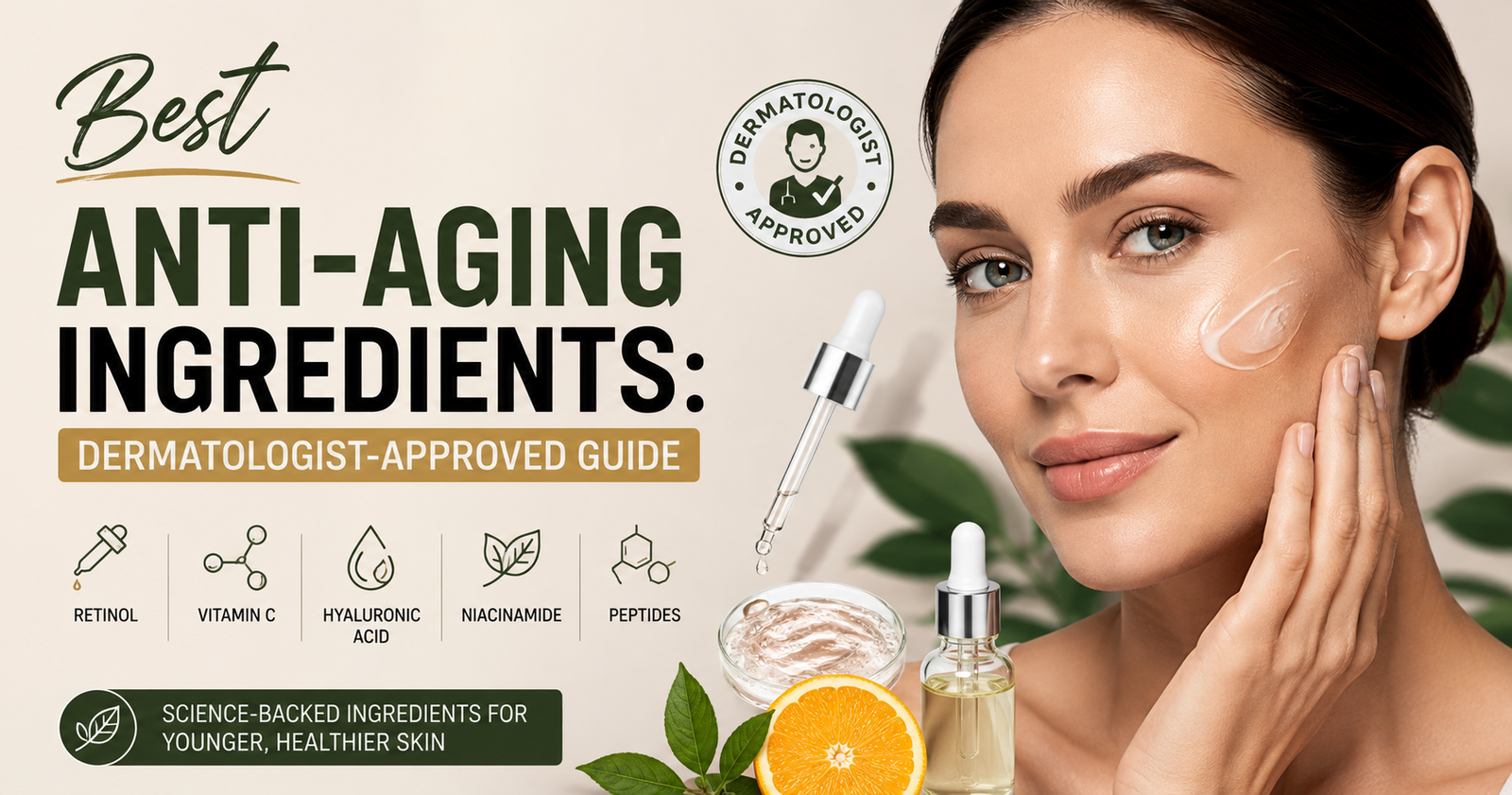
Navigating the skincare aisle can feel overwhelming. With thousands of serums, creams, and potions promising to turn back the clock, finding formulas that deliver measurable results requires cutting through marketing hype. The secret to smoother, firmer, and more radiant skin lies not in flashy packaging, but in understanding the best anti-aging ingredientsproven by clinical research.
As our skin ages, collagen synthesis slows, cellular turnover decreases, and cumulative exposure to UV radiation accelerates fine lines, loss of elasticity, and hyperpigmentation. Fortunately, targeted topical actives can reverse and delay many visible signs of photoaging. Whether you are looking to build a preventive regimen in your mid-twenties or target existing deep wrinkles, this comprehensive guide covers the best anti-aging ingredients recommended by dermatologists worldwide.
Understanding Skin Aging: How Active Ingredients Work
Skin aging occurs through two distinct processes:
- Intrinsic Aging: The natural biological process determined by genetics and cellular decline over time.
- Extrinsic Aging: Premature aging caused by environmental stressors, predominantly ultraviolet (UV) radiation—often referred to as photoaging—along with pollution and lifestyle factors.
Topical anti-aging products work through specific cellular mechanisms: boosting collagen synthesis, accelerating epidermal turnover, neutralizing free radical damage, or fortifying the moisture barrier. Knowing which actives perform these functions ensures you select the best anti-aging ingredients for your skin type and concerns.
The Top 7 Best Anti-Aging Ingredients (Dermatologist-Approved)
1. Retinoids (Retinol & Tretinoin): The Gold Standard
When dermatologists discuss the most effective anti-aging solutions, retinoids consistently top the list. Derived from Vitamin A, retinoids bind to retinoic acid receptors in the skin, dramatically speeding up cellular turnover and stimulating structural collagen production.
- Key Benefits: Softens fine lines and deep wrinkles, evens out hyperpigmentation, and improves overall skin firmness.
- Forms: Prescription-strength tretinoin (pure retinoic acid) offers rapid results, while over-the-counter options like retinaldehyde, retinol, and hydroxypinacolone retinoate offer gentler, gradual improvements with less irritation.
- How to Use: Apply at night to dry skin. Introduce it gradually (twice a week initially) to build tolerance and avoid flaking or redness.
2. Vitamin C (L-Ascorbic Acid): The Brightening Antioxidant
Solar radiation and environmental pollution generate free radicals—unstable molecules that damage healthy skin cells and break down collagen fibers. Vitamin C is a potent antioxidant that neutralizes these reactive oxygen species before they cause premature wrinkles and dark spots.
- Key Benefits: Neutralizes oxidative stress, inhibits excess melanin production (fading dark spots), and acts as an essential cofactor for collagen synthesis.
- Best Form: Pure L-Ascorbic Acid formulated at a concentration between 10% and 20% with an acidic pH (<3.5).Look for stable derivatives like Tetrahexyldecyl (THD) Ascorbate if you have sensitive skin.
- How to Use: Apply every morning under your broad-spectrum sunscreen to maximize environmental protection.
3. Broad-Spectrum Sunscreen (UV Filters): The Ultimate Preventive
While technically a product category rather than a single chemical compound, daily broad-spectrum sunscreen is universally recognized as the single best anti-aging ingredient formulation you can buy. Up to 80% of visible facial skin aging is caused by cumulative UV damage.
- Key Benefits: Prevents collagen breakdown, solar elastosis (sagging), dark spots, and skin cancers.
- Active Filters: Mineral filters like Zinc Oxide and Titanium Dioxide physically reflect UV light and suit sensitive skin, while modern chemical filters offer lightweight, invisible finishes.
- How to Use: Apply an SPF 30 or higher every morning as the final step in your routine, regardless of weather.
4. Hyaluronic Acid: The Moisture Magnet
Hydrated skin looks inherently younger, plumper, and smoother. Hyaluronic Acid (HA) is a naturally occurring glycosaminoglycan in our dermis capable of holding up to 1,000 times its weight in water.
- Key Benefits: Instantly plumps surface fine lines caused by dehydration, restores surface volume, and improves skin elasticity.
- Best Form: Products containing multi-molecular weight HA—larger molecules lock moisture at the surface while micro-molecules penetrate deeper epidermal layers.
- How to Use: Apply HA serums to damp skin before applying creams or oils to seal in hydration.
5. Peptides: The Collagen Building Blocks
Peptides are short chains of amino acids that serve as the building blocks of essential proteins like collagen, elastin, and keratin. Topically applied signal peptides act as chemical messengers, signaling skin cells to synthesize fresh collagen.
- Key Benefits: Promotes skin firmness, reinforces the structural matrix, and offers a non-irritating alternative for those who cannot tolerate strong retinoids.
- Popular Types: Signal peptides (e.g., Matrixyl 3000), neurotransmitter-inhibiting peptides (e.g., Argireline for dynamic expression lines), and copper peptides.
- How to Use: Suitable for morning and evening routines; pairs exceptionally well with hyaluronic acid and niacinamide.
6. Niacinamide (Vitamin B3): The Barrier Builder
Niacinamide is one of the most versatile and well-tolerated anti-aging actives in modern dermatology. It plays a crucial role in cellular energy (NAD+) production and lipid synthesis.
- Key Benefits: Strengthens the lipid barrier, reduces inflammation, minimizes visible pore size, and inhibits pigment transfer to reduce hyperpigmentation.
- Optimal Strength: Clinical studies demonstrate significant anti-aging benefits at concentrations of 2% to 5%.
- How to Use: Can be used twice daily in serums, lotions, or moisturizers.
7. Alpha-Hydroxy Acids (AHAs): The Texture Smoothers
Exfoliating acids like Glycolic Acid and Lactic Acid gently loosen the intercellular glue holding dull, dead skin cells together.
- Key Benefits: Instantly boosts radiant glow, refines rough texture, fades dark spots, and improves the absorption of subsequent anti-aging treatments.
- Glycolic vs. Lactic: Glycolic Acid has the smallest molecular size for rapid penetration, making it highly effective for firming. Lactic Acid features a larger molecule and humectant properties, making it ideal for dry or sensitive skin types.
- How to Use: Apply 1 to 3 nights per week after cleansing. Always follow with sunscreen during the day.
How to Layer the Best Anti-Aging Ingredients in Your Routine
Combining the best anti-aging ingredients correctly prevents irritation and maximizes skin health. Below is a dermatologist-approved daily framework:
| Time | Step | Recommended Actives | Primary Goal |
| Morning | 1. Cleanse | Gentle, non-stripping cleanser | Cleanse skin |
| 2. Treat | Vitamin C + Hyaluronic Acid / Niacinamide | Antioxidant protection & hydration | |
| 3. Protect | Broad-Spectrum SPF 30+ | UV defense & age prevention | |
| Evening | 1. Cleanse | Double cleanse (Oil/Micellar + Gentle Cleanser) | Remove sunscreen & impurities |
| 2. Treat | Retinoid OR AHA (Alternate nights) | Collagen renewal & exfoliation | |
| 3. Restore | Peptides, Ceramides & Hyaluronic Acid | Barrier repair & hydration |
Frequently Asked Questions (FAQs)
What age should I start using anti-aging ingredients?
Prevention should ideally begin in your mid-twenties. Collagen production drops by roughly 1% per year starting in your early 20s. Starting daily broad-spectrum SPF, Vitamin C, and mild antioxidants early helps preserve existing structural collagen.
Can I use Retinol and Vitamin C together?
It is best to split them between day and night: use Vitamin C in the morning for antioxidant protection against daylight stress, and Retinol at night when your skin undergoes natural repair. Using them together at the exact same time can disrupt skin pH and cause irritation.
How long does it take to see results from anti-aging ingredients?
Immediate hydration benefits from Hyaluronic Acid appear within minutes, but long-term structural changes take time. Retinoids and Vitamin C typically require 8 to 12 weeks of consistent use to show visible improvements in fine lines, firmness, and hyperpigmentation.
Are natural anti-aging ingredients as effective as synthetic ones?
Plant extracts (like Bakuchiol or Green Tea) offer solid antioxidant and soothing benefits. However, clinical gold standards like Retinoids, Vitamin C, and Niacinamide have decades of extensive, peer-reviewed clinical research supporting their ability to alter skin architecture.
Final Thoughts: Building Your Anti-Aging Skincare Strategy
Achieving resilient, youthful skin doesn’t require a complicated 10-step routine. By focusing on the best anti-aging ingredients backed by clinical dermatology—retinoids, Vitamin C, broad-spectrum sunscreen, peptides, and hydrating actives—you can build a simple yet remarkably powerful routine. Consistency is key: pair these proven active ingredients with daily sun protection and patient application for lasting, healthy results.
Thankyou for all your efforts that you have put in this. very interesting info .