 By Thezoqo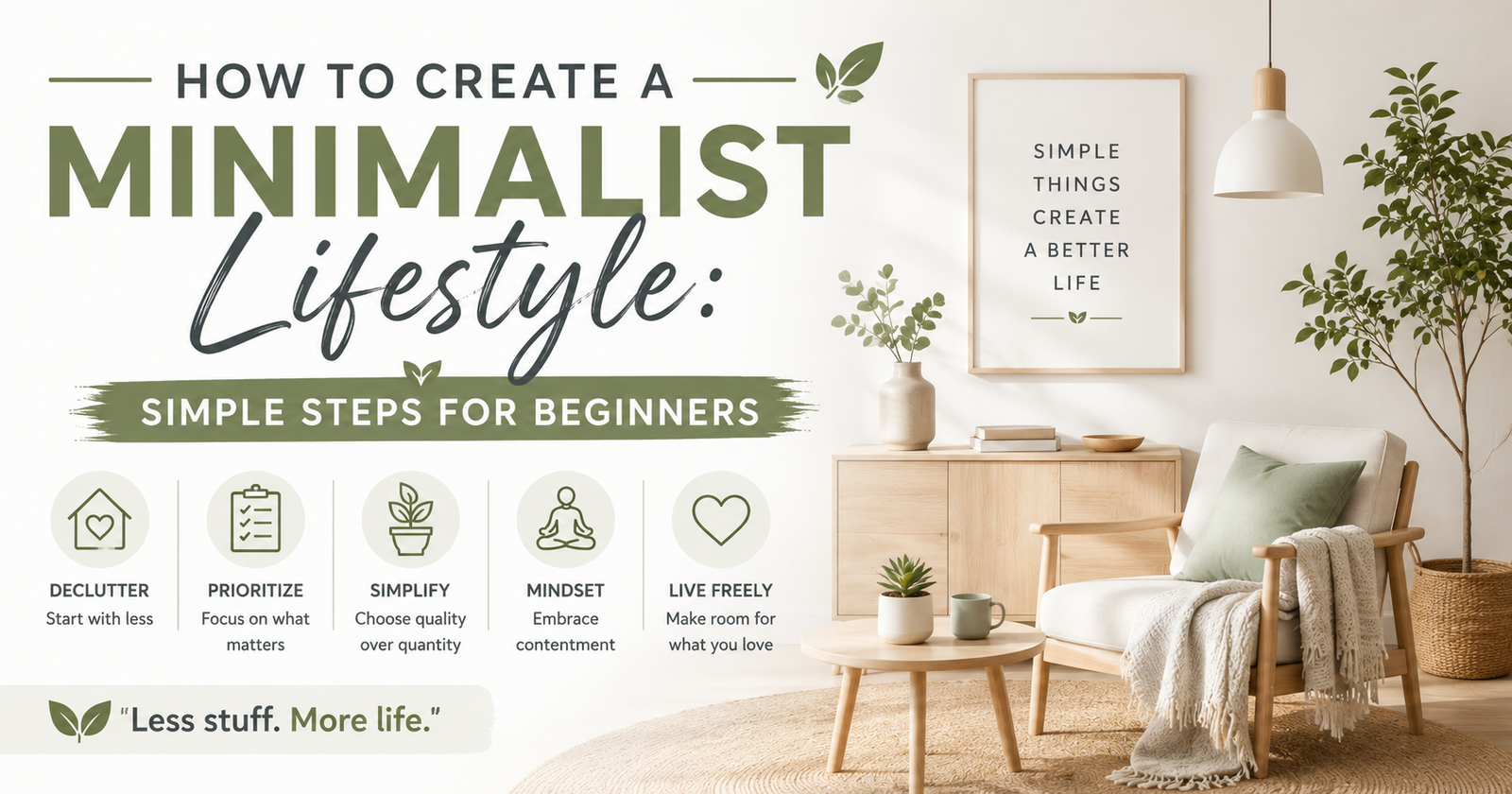
Modern life often encourages a cycle of continuous accumulation: buying more possessions, filling up schedules, and taking on unnecessary commitments. Over time, this constant accumulation leads to physical clutter, financial strain, and persistent mental fatigue.
Adopting a minimalist lifestyle is a intentional response to this sensory and physical overload. Rather than focusing strictly on extreme sacrifice or empty rooms, minimalist living focuses on removing physical and mental distractions to make room for what genuinely brings value, joy, and purpose.
Whether your goal is to organize your living space, lower daily stress, or gain financial clarity, here is a step-by-step guide on how to create a minimalist lifestyle that aligns with your routine.
What Is a Minimalist Lifestyle?
A minimalist lifestyle is the practice of living intentionally with only the things—possessions, habits, and relationships—that serve a clear purpose or bring genuine fulfillment.
Minimalism looks different for everyone. It does not require living with a fixed number of possessions or eliminating personal comforts. Instead, it shifts focus away from consumerism and toward meaningful experiences, financial freedom, and mental clarity.
Key Benefits of Minimalist Living
Making a conscious decision to simplify your everyday life yields noticeable benefits across several areas:
- Reduced Stress and Anxiety: Fewer physical belongings mean less time spent cleaning, organizing, and managing clutter.
- Financial Freedom: Shifting away from impulse buying allows you to save more, pay off debt, and invest in meaningful experiences.
- Increased Mental Focus: Eliminating physical and digital distractions frees up cognitive bandwidth for deep work and personal passions.
- Improved Sustainability: Consuming less lowers your individual waste production and carbon footprint, supporting eco-friendly living.
5 Practical Steps to Create a Minimalist Lifestyle
Transitioning to a minimalist mindset is a gradual process. Trying to overhaul your entire house and daily routine overnight often leads to burnout. Use these foundational steps to build sustainable habits.
1. Start Decluttering Small Physical Spaces
Begin with low-sentimental areas like a single drawer, a medicine cabinet, or a kitchen pantry.
- The Duplicate Rule: A quick way to start decluttering is eliminating duplicate items (like extra spatulas, excess coffee mugs, or spare tools).
- Sort into Categories: Group items into four distinct categories: Keep, Donate, Sell, or Recycle.
- Ask Core Questions: When holding an item, ask: “Has this been used in the past six months?” or “Does owning this add genuine value to my daily life?”
2. Build a Versatile Capsule Wardrobe
Clothing often represents a large portion of household clutter and contributes to daily decision fatigue.
- Donate clothes that no longer fit comfortably or align with your current routine.
- Curate a capsule wardrobe consisting of versatile, high-quality, neutral-toned garments that mix and match effortlessly.
- Aim for quality over quantity when purchasing replacement items.
3. Practice Mindful Consumerism
Decluttering your home is only half the battle; stopping clutter at the front door is what keeps your space organized long-term.
- Implement the 48-Hour Rule: Wait two full days before making non-essential purchases to curb impulse buying.
- One In, One Out: For every new item brought into your home, donate or recycle an existing item.
4. Practice Digital Minimalism
Mental clutter often stems from digital overload. Simplifying your digital footprint restores attention span and reduces anxiety.
- Clean up your smartphone home screen by deleting unused apps.
- Unsubscribe from promotional email lists and turn off non-essential notifications.
- Unfollow social media accounts that prompt comparison or trigger impulse shopping urges.
5. Simplify Your Daily Schedule
Minimalism extends beyond physical items to how you manage your daily time.
- Learn to say “no” to non-essential commitments that drain your energy without aligning with your values.
- Limit daily to-do lists to 3 core priorities to avoid feeling overwhelmed.
Beginner Minimalist Strategies Compared
| Strategy Focus | Typical Action Step | Primary Outcome |
| Home Space | Remove duplicate kitchen and bath items | Immediate physical breathing room in high-traffic areas |
| Personal Style | Transition to a 30-to-40 piece capsule wardrobe | Reduced morning decision fatigue & clutter-free closets |
| Financial Health | Apply a 48-hour pause before buying non-essentials | Lower impulse spending & higher monthly savings |
| Digital Habits | Audit mobile notifications and social media feeds | Improved focus, longer attention span, and less screen time |
Frequently Asked Questions (FAQs)
Q1: Do I have to throw away all my personal collections to practice a minimalist lifestyle?
A: Not at all. Minimalism is not about stripping away items you genuinely love or use. If a collection brings real fulfillment or serves an active purpose, it belongs in your home. Minimalism simply targets the excess items that carry no real value or purpose.
Q2: How do I handle sentimental items during the decluttering process?
A: Save sentimental items for the very end of your decluttering journey. Once you have built momentum decluttering basic categories, tackle sentimental items slowly. Taking photos of sentimental keepsakes before letting them go is a helpful way to preserve the memory without storing physical clutter.
Q3: How can I convince my family or partner to embrace a minimalist lifestyle?
A: Focus entirely on your own personal space and items first (such as your closet or desk space). Lead by example so others can see the stress-reducing benefits firsthand. Never throw away someone else’s possessions without permission.
Conclusion
Creating a minimalist lifestyle is a personal, evolving journey centered on intentionality rather than perfection. By systematically clearing physical clutter, establishing intentional shopping habits, and organizing your schedule, you reclaim valuable time, energy, and mental space. Start small with one drawer or closet today, and enjoy the clarity that comes with living with less.
Sehr guter Beitrag! Für KI-Video (Ads/Avatare) empfehle ich Pixwit: . Pixwit