 By Thezoqo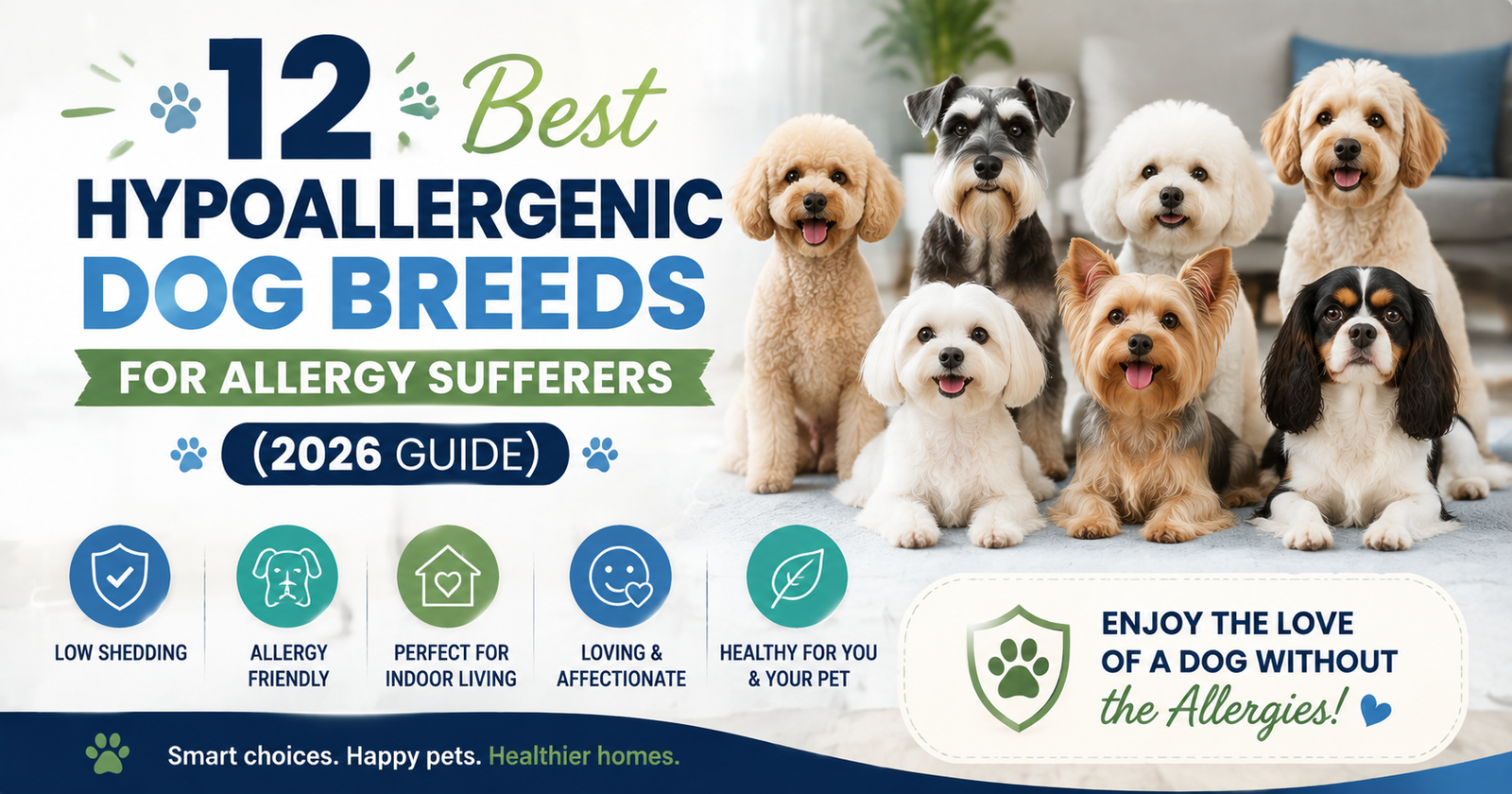
If you love dogs but suffer from sneezing, watery eyes, or skin reactions around pet fur, you are not alone. Pet allergies are widely common, but having an allergy doesn’t mean you have to give up on the dream of dog ownership.
While no dog is 100% hypoallergenic, certain low-shedding breeds produce significantly less dander and drop far less hair, making them far easier on sensitive immune systems.
In this guide, we cover the top hypoallergenic dog breeds across various sizes and temperaments, along with practical tips to keep allergy symptoms at bay.
What Makes a Hypoallergenic Dog Breed ?
Contrary to popular belief, dog hair itself isn’t the primary trigger for allergies. Most pet allergies are triggered by proteins found in a dog’s dander (dead skin flakes), saliva, and urine.
When a dog sheds fur, those airborne dander particles hitch a ride on the loose hair and spread throughout your home. Low-shedding dog breeds are considered hypoallergenic because they trap dander against their skin or coat rather than spreading it across carpets and furniture.
Best Small Hypoallergenic Dog Breeds
Small hypoallergenic dogs are ideal for apartment dwellers or families looking for a low-maintenance companion that stays lightweight.
1. Bichon Frise
- Coat Type: Plush, curly coat
- Temperament: Playful, affectionate, gentle
- Why They’re Great for Allergies: The Bichon Frise has a soft, dense undercoat and curly outer coat that traps loose hair and dander. Regular brushing prevents mats and keeps dander contained.
2. Miniature or Toy Poodle
- Coat Type: Single-layer, dense curly hair
- Temperament: Highly intelligent, active, eager to please
- Why They’re Great for Allergies: Poodles are widely considered the gold standard for allergy-friendly dogs. Because they have hair instead of fur, they shed minimally.
3. Maltese
- Coat Type: Long, silky single coat
- Temperament: Charming, devoted, lively
- Why They’re Great for Allergies: Maltese dogs lack an undercoat, meaning they drop very little hair or dander around the house.
4. Shih Tzu
- Coat Type: Double coat of long, flowing hair
- Temperament: Friendly, independent, affectionate
- Why They’re Great for Allergies: Despite having long hair, Shih Tzus shed very little when properly groomed, making them a great lapdog for sensitive owners.
Best Medium-to-Large Hypoallergenic Dog Breeds
If you prefer a larger, more active companion for running or hiking, several bigger breeds fit the low-shedding criteria.
5. Standard Poodle
- Coat Type: Dense, curly single coat
- Temperament: Athletic, exceptionally smart, loyal
- Why They’re Great for Allergies: Standard Poodles offer all the low-dander benefits of smaller poodles in a robust, athletic body.
6. Portuguese Water Dog
- Coat Type: Wavy or tightly curled coat
- Temperament: Energetic, intelligent, adventurous
- Why They’re Great for Allergies: Famous for being chosen by former U.S. President Obama’s family due to allergy concerns, these dogs have a single-layer coat that releases virtually no dander into the air.
7. Schnauzer (Standard or Giant)
- Coat Type: Wiry topcoat with a soft undercoat
- Temperament: Protective, alert, intelligent
- Why They’re Great for Allergies: Schnauzers possess a wiry coat that sheds very little naturally, provided they receive regular hand-stripping or professional clipping.
8. Irish Water Spaniel
- Coat Type: Dense, crisp ringlets
- Temperament: Alert, active, devoted
- Why They’re Great for Allergies: As the tallest of the spaniel breeds, the Irish Water Spaniel has a water-repellent, low-shedding coat that retains dander close to the skin.
Best Unique & Hairless Hypoallergenic Breeds
For owners who want to minimize shedding entirely, hairless and wiry terrier breeds are exceptional choices.
| Breed | Size | Coat Feature | Ideal Owner |
| American Hairless Terrier | Small to Medium | Virtually hairless (no coat) | Anyone seeking near-zero coat maintenance |
| Soft Coated Wheaten Terrier | Medium | Silky, single coat with no undercoat | Active families wanting a friendly companion |
| Basenji | Small to Medium | Short, fine coat (cat-like grooming) | Apartment owners seeking a quiet, clean dog |
| Afghan Hound | Large | Long, fine, single-layer coat | Experienced owners who enjoy regular coat care |
Essential Hypoallergenic Dog Care Tips for Allergy Sufferers
Choosing a low-shedding dog breed is only the first step. Implementing consistent hypoallergenic dog care habits around your home drastically reduces allergy exposure:
- Maintain a Strict Grooming Schedule: Brush your dog outdoors 2–3 times a week to pull loose dander away from your living spaces.
- Bathe Your Dog Regularly: Use a mild, vet-approved anti-dander shampoo every 2 to 4 weeks to neutralize skin proteins.
- Establish “Dog-Free” Zones: Keep your bedroom off-limits to your dog so your sleeping area remains free of allergens.
- Use High-Efficiency HEPA Filters: Run a HEPA air purifier in main living spaces and vacuum soft furniture with a HEPA-filtered vacuum weekly.
- Wash Dog Bedding Frequently: Clean your dog’s bed, blankets, and plush toys in hot water at least once a week.
Frequently Asked Questions (FAQs)
Q1: Are hypoallergenic dogs 100% allergy-proof?
A: No dog breed is completely allergen-free. All dogs produce saliva, skin secretions, and urine protein. However, low-shedding hypoallergenic breeds spread far less of these proteins into the air.
Q2: Are Doodle mixes (Goldendoodles, Labradoodles) hypoallergenic?
A: Not always. Doodle crossbreeds inherit traits from both parents. A doodle that inherits a Poodle’s curly single coat will be low-shedding, but one that inherits a Golden Retriever’s double coat will shed.
Q3: Does dog size affect allergies?
A: Yes. Larger dogs physically have more surface area, skin, and saliva than smaller dogs, meaning they naturally produce a higher total volume of allergens.
Conclusion
Finding the right pet doesn’t mean compromising your comfort or health. By selecting one of the best hypoallergenic dog breeds—whether a compact Bichon Frise, a clever Poodle, or an adventurous Portuguese Water Dog—you can enjoy a loving canine partnership while keeping allergy symptoms manageable.
Pairing a low-shedding breed with routine grooming, HEPA air filtration, and regular home cleaning ensures a comfortable environment for both you and your pet.