 By Thezoqo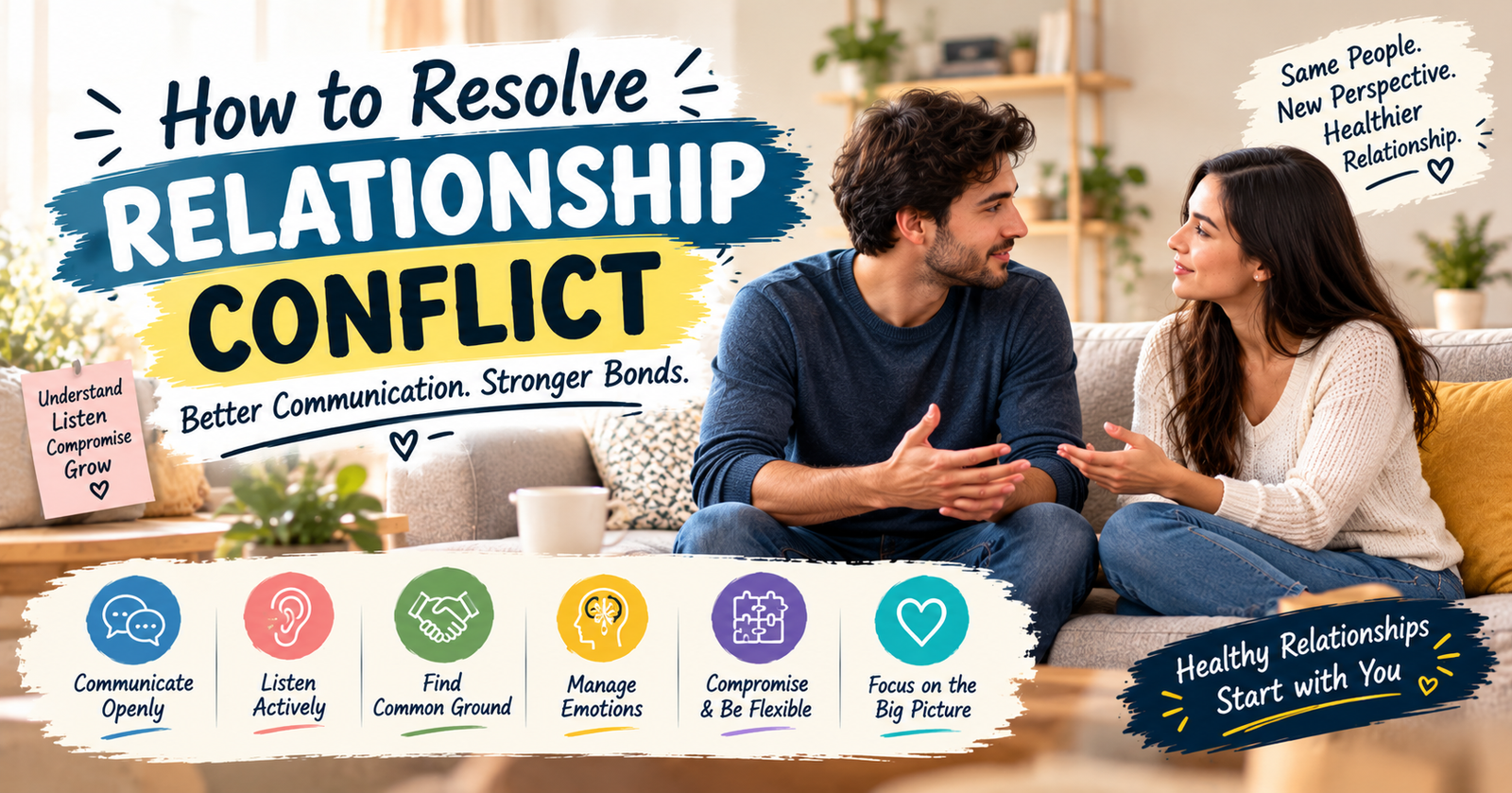
Every healthy relationship experiences disagreement. Whether you are navigating financial decisions, division of household labor, parenting choices, or subtle emotional misunderstandings, disagreement is a natural byproduct of two unique individuals sharing their lives. Conflict itself is not a sign of a failing partnership; rather, the way partners handle tension determines whether a relationship thrives or deteriorates over time.
Learning how to resolve relationship conflict constructively converts friction into an opportunity for deeper intimacy, mutual understanding, and personal growth. Unresolved tension, on the other hand, often manifests as resentment, emotional distance, and chronic distress.
This comprehensive guide of how to resolve relationship conflict breaks down the psychological drivers of partnership disputes and provides practical, evidence-based communication frameworks designed to help couples navigate disagreements with empathy, respect, and lasting success.
Understanding the Root Causes of Relationship Conflict
Before learning practical resolution techniques, it is essential to look beyond surface-level arguments. Disagreements over minor issues—such as unwashed dishes or delayed text replies—are rarely just about the task itself. They almost always stem from deeper emotional needs and unmet expectations.
Unmet Needs and Emotional Triggers
Most relationship arguments revolve around fundamental psychological requirements: feeling heard, valued, respected, safe, and loved. When a partner feels ignored or taken for granted, a small event can trigger a significant emotional reaction. Identifying these core emotional triggers helps couples address the actual source of friction rather than arguing about trivial surface details.
Mismatched Communication Styles
People enter relationships with unique communication patterns shaped by family upbringing, past romantic experiences, and individual personality traits. One partner may seek immediate discussion during a disagreement, while the other might shut down or require time to process emotions internally. Recognizing these differing processing speeds prevents minor misunderstandings from spiraling into intense showdowns.
To better understand interpersonal dynamics and psychological behavioral patterns, you can read more about conflict resolution theory on Wikipedia.
Core Principles of Healthy Communication
Successfully mastering how to resolve relationship conflict begins with establishing grounded communication habits during moments of calm.
1. Practice Active Listening Over Defensiveness
During heated moments, most people listen with the intent to reply and defend themselves rather than to understand their partner’s perspective. Active listening requires setting aside your internal defense narrative, focusing fully on your partner’s words, and validating their feelings—even if you disagree with their interpretation of events.
- Maintain open body language and eye contact.
- Avoid interrupting while your partner is speaking.
- Reflect back what you heard: “What I hear you saying is that you felt unsupported when I forgot our plans. Is that accurate?”
2. Shift from “You” Statements to “I” Statements
Accusatory language immediately places your partner on the defensive, shutting down constructive dialogue. Using “I” statements allows you to take ownership of your emotional experience without placing direct blame.
- Accusatory: “You always ignore me when you get home from work.”
- Constructive: “I feel lonely when we don’t reconnect after work because I miss spending quality time with you.”
3. Avoid Absolutist Language
Words like “always” and “never” are rarely accurate and instantly provoke defensive counterarguments. Stick strictly to the specific situation at hand rather than bringing up past grievances or generalizing your partner’s behavior over time.
Step-by-Step Guide: How to Resolve Relationship Conflict Efficiently
When an active argument arises, having a structured framework keeps both partners grounded and focused on finding solutions rather than inflicting emotional pain.
Step 1: Recognize Emotional Overwhelm and Call a Timeout
When heart rates rise and fight-or-flight responses kick in, rational conversation becomes neurologically impossible. Psychologists call this state emotional flooding. Recognizing when either partner is flooded is the single most effective way to prevent harmful arguments.
- Establish an agreed-upon code word or gesture for taking a break.
- Set a specific time to resume the discussion (e.g., “Let’s take 30 minutes to calm down and reconvene at 4:00 PM”).
- Use your timeout for self-soothing activities like deep breathing or walking—do not spend the time rehearsing arguments in your head.
For actionable self-improvement frameworks, wellness strategies, and lifestyle advice, explore insightful resources on https://thezoqo.com/.
Step 2: Identify the Underlying Emotional Need
Once emotions have cooled, re-approach the conversation by focusing on feelings rather than actions. Ask yourselves:
- What specific action sparked this emotion?
- What core need was missed (e.g., security, appreciation, autonomy, comfort)?
- How can both partners work together to meet this need in the future?
Step 3: Focus on Problem-Solving as a Unified Team
Shift your mindset from an “Me vs. You” power struggle to an “Us vs. The Problem” collaborative effort. Remember that winning an argument at the expense of your partner’s emotional well-being ultimately damages the entire relationship.
- Brainstorm multiple potential compromises together.
- Be willing to give up minor preferences to secure mutual peace.
- Focus on sustainable solutions that respect both individuals’ core boundaries.
Step 4: Repair and Reconnect
Reaching a verbal agreement is only half the battle; restoring emotional intimacy requires intentional repair gestures. A warm hug, a sincere apology for sharp words spoken in anger, or a shared moment of humor helps release residual stress and reinforces your bond.
Overcoming Destructive Communication Patterns
Certain behavioral habits act as toxic obstacles to healthy resolution. Psychologists refer to these destructive patterns as major threats to relationship longevity. Recognizing and eliminating them is a critical step in mastering how to resolve relationship conflict.
Criticism vs. Constructive Feedback
Criticism attacks your partner’s core character or personality rather than addressing a specific behavior.
- Toxic Criticism: “You are so lazy and selfish.”
- Healthy Feedback: “I felt overwhelmed when the kitchen was left uncleaned last night after I asked for help.”
Defensiveness
Defensiveness is an automatic attempt to deflect blame or play the victim instead of taking responsibility for your part in a disagreement. Acknowledging even a small portion of your partner’s complaint diffuses tension almost instantly.
Contempt
Contempt involves rolling your eyes, mocking, using sarcasm, or speaking down to your partner. It signals disgust and is considered the single most dangerous predictor of relationship breakdown. Treat your partner with fundamental respect, even when you feel upset.
Stonewalling
Stonewalling occurs when one partner completely shuts down, stops responding, and emotionally withdraws from the interaction. If you feel overwhelmed to the point of shutting down, explicitly communicate your need for a short break rather than ignoring your partner.
Rebuilding Trust and Long-Term Harmony
Resolving immediate arguments is vital, but maintaining long-term connection requires ongoing relationship maintenance.
- Express Daily Gratitude: Actively notice and verbalize appreciation for small things your partner does every day.
- Schedule Regular Relationship Check-Ins: Dedicate a calm 15-minute weekly chat to discuss schedule coordination, emotional connection, and minor frustrations before they turn into major explosions.
- Nurture Shared Joy: Ensure your relationship includes regular lighthearted fun, date nights, and shared hobbies outside of domestic responsibilities.
Key Takeaways for Resolving Conflict
- View Conflict as an Opportunity: Use disagreements to uncover unmet needs and build deeper mutual understanding.
- Listen Actively: Prioritize understanding your partner’s emotional perspective over formulating your defense.
- Manage Flooding: Take deliberate, timed breaks when conversations become overly heated.
- Attack the Problem, Not Each Other: Focus on collaborative solutions rather than winning points or assigning blame.
- Practice Daily Maintenance: Foster gratitude, respect, and regular communication to prevent small issues from compounding over time.
Final Thoughts: Growth Through Connection
Learning how to resolve relationship conflict is an ongoing skill that takes time, patience, and intentional practice from both partners. Disagreements will inevitably occur, but they do not have to disrupt your emotional foundation. By approaching every dispute with empathy, active listening, and a commitment to teamwork, you can transform difficult conversations into building blocks for a resilient, loving, and lifelong partnership.